
Forging in Railways: Powering the Backbone of Modern Transport
Railways are among the most demanding users of engineered components. Every axle, coupler, and suspension arm operates under continuous load vibration and impact, often for decades. In such an environment, material failure is not an option. This is why forged components remain foundational to railway safety and performance, forming the unseen backbone of modern rail transport systems.
According to industry estimates, forged railway parts account for a significant share of critical railway hardware, especially in bogies, braking systems and undercarriage assemblies. As Indian Railways modernises and expands, the role of precision forging is becoming even more central.
Why Forgings Are Ideal for Railway Loads and Vibration
Railway components face unique operating conditions: cyclic loading, thermal variation, high impact and long service life expectations. Forging is particularly suited to these demands because it aligns the metal's internal grain structure along the shape of the component, making it strong enough to withstand the demands.
This grain flow provides:
- Higher fatigue resistance than cast parts
- Better impact strength under shock loads
- Lower risk of internal defects such as porosity
Compared to cast components, forged parts offer greater reliability in safety-critical applications, which is why railways globally continue to specify forging for core structural and motion-related components.
Key Forged Components in Indian Railways
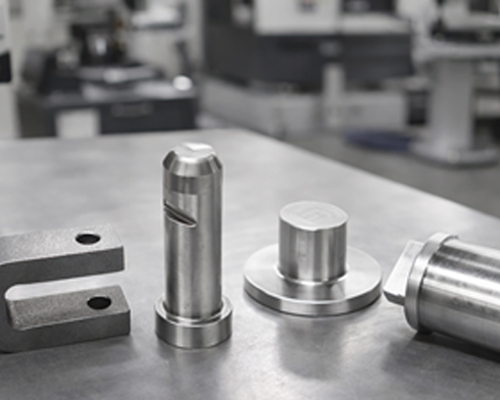
Forged components are widely used across rolling stock and track systems, including:
- Bogie parts such as frames, brackets, and suspension arms
- Coupler components that handle tensile and compressive forces between coaches
- Axle collars and bearing housings
- Brake system parts exposed to repeated thermal and mechanical stress
These components must comply with strict dimensional and metallurgical standards, often governed by both Indian Railways specifications and international norms.
The LHB Revolution: Lighter, Stronger, Safer
The shift from ICF to LHB (Linke Hofmann Busch) coaches marked a structural transformation in Indian Railways. LHB coaches are lighter, safer at higher speeds, and designed for better crashworthiness.
This transition increased demand for:
- Tighter tolerances
- Better surface finish
- Higher fatigue life
Precision forging, combined with controlled heat treatment and machining, became essential to meet these requirements. As a result, forging suppliers capable of delivering consistent, high-quality components gained strategic importance in the railway supply chain.
How OEMs Select Railway Forging Suppliers
Railway OEMs and Tier-1 suppliers evaluate forging partners on more than just cost. Key selection criteria typically include:
- Material grade validation and traceability
- Fatigue and impact testing capability
- Automation and process consistency
- Compliance with global quality standards
- Export readiness and documentation discipline
This mirrors supplier selection in other regulated sectors such as automotive and agricultural machinery, where long-term reliability is critical.
Technology and Quality Systems Railways Require
Modern railway forging relies heavily on:
- Non-destructive testing, such as ultrasonic and magnetic particle inspection
- Metallurgical analysis for microstructure and grain flow
- CAD-based die design and simulation to achieve consistency
- Digitally monitored heat treatment systems
These systems reduce variability and improve lifecycle performance, aligning railway components with global safety expectations.
India's Export Advantage in Railway Forgings
India has emerged as a competitive supplier of railway forgings to global markets, supported by:
- Cost-efficient manufacturing
- Skilled metallurgical and engineering talent
- Growing compliance with international certifications
- Experience supplying to regulated industries
As rail infrastructure expands globally, particularly in Asia, Africa and parts of Europe, Indian forging companies are well positioned to support export demand.
The Forging-Railway - Agriculture Link
An interesting structural overlap exists between railway forging suppliers and agricultural machinery manufacturers. Many leading forgers serve multiple sectors, producing components for railways, agricultural machinery and implements.
This multi-sector capability is why several established forging firms are also recognised as OEM agriculture parts manufacturers in India, leveraging similar metallurgical expertise, tooling know-how and quality systems across industries. The cross-pollination of standards raises overall manufacturing maturity.
Final Thoughts: Forgings and the Future of Rail Infrastructure
Looking ahead, the next phase of railway development will bring new challenges. High-speed rail, hydrogen locomotives and electric traction systems will place even greater demands on materials and manufacturing precision.
Forged components, with their proven strength and reliability, will continue to underpin this evolution. For manufacturers like Forge Auto International, which operate across railways, automotive, and agriculture, the opportunity lies in applying deep forging expertise to the next generation of transport infrastructure.
As railways modernise, forging will not just support the backbone of transport - it will help define its future.
Looking for a forging partner aligned with modern railway standards? Forge Auto is ready to engage.
Related read: Staying on Track: How Forge Auto International Ltd. is Powering Progress in Railway Parts Manufacturing
About us
Founded in 2001, Forge Auto International Ltd. (FAI) started as a small manufacturing unit. Over the years, we have grown into a modern, professionally managed company known for delivering quality and reliability.

