
Forged for Power: Types of Hydraulic Parts Used in the Automotive Industry
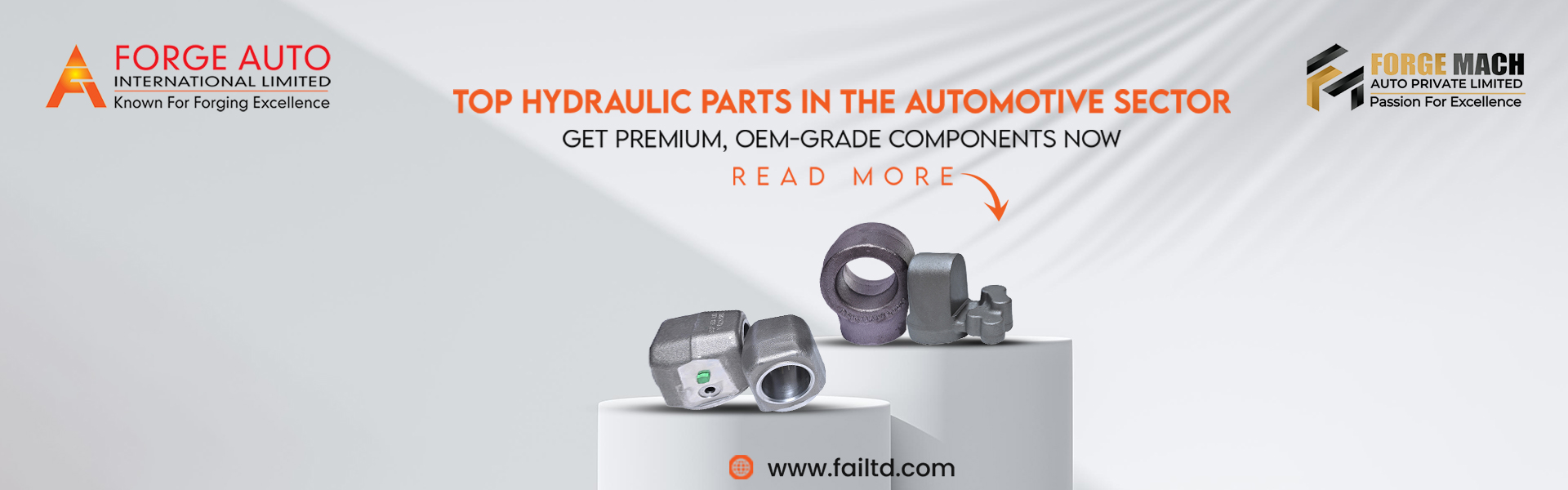
Hydraulics are the unsung heroes behind the strength, control, and stability of modern vehicles. From power steering systems to braking and suspension, hydraulic components ensure that motion is managed with precision-and force is multiplied efficiently.
But not all hydraulic parts are created equal. In high-performance and heavy-load environments, forged hydraulic components stand out for their exceptional strength, reliability, and durability. Whether you're running a commercial fleet, manufacturing vehicles, or supplying to OEMs, understanding these forged parts is essential to making informed sourcing decisions.
Let's take a closer look at the types of forged hydraulic parts commonly used in the automotive sector.
Why Forging? A Quick Primer
Forging is a manufacturing process that involves shaping metal using localized compressive forces. This process improves the grain structure, enhances mechanical properties, and results in stronger, more wear-resistant parts-a perfect fit for high-pressure hydraulic systems in vehicles.
Common Forged Hydraulic Components in Automotive
| Component | Function | Typical Application |
|---|---|---|
| Hydraulic Cylinders | Convert hydraulic energy into linear motion | Braking systems, suspension systems |
| Pistons | Transfer pressure to generate movement | Brake calipers, shock absorbers |
| Rod Ends / Eyelets | Connect hydraulic cylinders to vehicle frames | Power steering, suspension links |
| Yokes & Clevises | Allow articulation and load transmission | Steering arms, stabiliser links |
| Flanges | Secure pipe and tube connections | Hydraulic transmission lines |
| Fittings & Adapters | Ensure leak-proof connection of fluid lines | Hydraulic power units and controls |
| Valve Bodies | Control fluid flow direction and rate | Transmission control units |
| Bushings & Sleeves | Reduce friction and wear in high-load areas | Pivot points in chassis and suspension |
Hydraulic Cylinder Components
Hydraulic cylinders are at the heart of most motion control systems. In automotive setups, forged end caps, barrels, and rods are critical to withstanding extreme pressures without deformation or leakage.
"Forged hydraulic cylinders are engineered to absorb shock loads and maintain stability under harsh driving conditions."
- AutoHydraulics Weekly Journal
Pistons and Piston Rods
These parts are subjected to repetitive axial loads. Forging offers the needed tensile strength to prevent bending or fatigue. Many pistons in automotive shock absorbers and braking systems are forged from high-strength alloy steel or aluminium alloys for lighter weight and better performance.
Rod Ends and Clevis Yokes
These connecting elements serve as links between hydraulic cylinders and vehicle structures. They must be durable, flexible, and resistant to misalignment. Forged rod ends and clevises offer better grain flow, which translates into higher impact strength and long-term reliability.
Flanges, Bushings, and Fittings
In high-pressure hydraulic circuits, flanges and fittings ensure secure and leak-proof connections. Forged versions are used over cast or machined types when strength and vibration resistance are a priority-especially in heavy-duty trucks and off-road vehicles.
Bushings and sleeves, often forged from bronze or steel, are used in pivoting and rotational joints to reduce wear, distribute loads evenly, and extend component life.
Valve Bodies and Manifolds
Valve bodies direct the flow and pressure of hydraulic fluid within complex control systems, such as transmission control modules or ABS braking systems. Forging improves the internal strength and prevents crack propagation, especially in high-vibration environments.
Forged vs. Cast Hydraulic Parts: A Snapshot
| Property | Forged Parts | Cast Parts |
|---|---|---|
| Strength | Very High (due to grain alignment) | Moderate |
| Durability | Excellent under pressure and fatigue | Lower under repeated stress |
| Defect Tolerance | Low porosity, fewer inclusions | Higher risk of internal defects |
| Applications | Critical high-load systems | Non-critical applications |
| Cost | Slightly higher | Lower initial cost but shorter lifespan |
Choosing the Right Hydraulic Parts Manufacturer
In the world of automotive hydraulics, reliability isn't optional-it's mandatory. Whether you're building for passenger cars, commercial trucks, or off-road vehicles, choosing a hydraulic parts manufacturer that specializes in forged components ensures that your systems perform flawlessly under all conditions.
Look for a partner with:
- Forging and heat treatment expertise
- Precision machining capabilities
- Compliance with ISO/IATF quality standards
- Experience with OEMs and Tier 1 suppliers
Final Thoughts
Hydraulic systems might work behind the scenes, but their performance defines how a vehicle steers, stops, and responds. And it all starts with the quality of the components. Forged hydraulic parts are built for endurance, safety, and precision-traits you can't compromise on.
When strength, reliability, and performance matter, choose a trusted hydraulic parts manufacturer who understands the demands of modern mobility.
About us
Founded in 2001, Forge Auto International Ltd. (FAI) started as a small manufacturing unit. Over the years, we have grown into a modern, professionally managed company known for delivering quality and reliability.
 Why Forging? A Quick Primer
- Common Forged Hydraulic Components in Automotive
- Hydraulic Cylinder Components
- Pistons and Piston Rods
- Rod Ends and Clevis Yokes
- Flanges, Bushings, and Fittings
- Valve Bodies and Manifolds
- Forged vs. Cast Hydraulic Parts: A Snapshot
- Choosing the Right Hydraulic Parts Manufacturer
- Look for a partner with:
- Final Thoughts
