
Inside the Supply Ecosystem Powering Railway Components: Strength, Standards and Strategic Forging
Railways are more than a mode of transport - they are national infrastructure arteries, moving economies, connecting regions and enabling industrial growth. Behind every kilometre of track lies an engineering ecosystem where reliability is non-negotiable.
At the core of this system are forged components - silent enablers that absorb load, resist vibration and sustain performance over decades. For manufacturers like Forge Auto International, this responsibility translates into designing and producing components where metallurgical precision directly impacts safety and lifecycle performance.
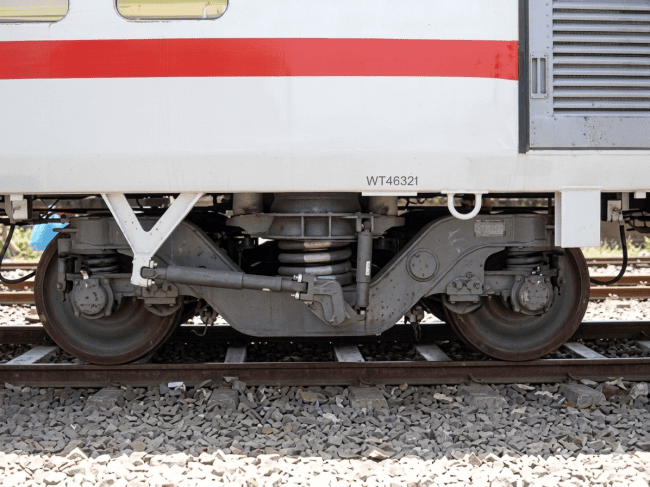
In this context, supply chain strength is not just a procurement concern - it is a direct determinant of operational reliability.
The Railway Supply Chain: A Multi-Tier Engineering Network
The railway supply chain operates as a layered, tightly controlled engineering network.
- Tier-1 OEMs focus on system integration and final assembly
- Tier-2 manufacturers specialise in components, metallurgy and machining
- Integration spans design, forging, heat treatment, machining and testing
Procurement in railway projects is driven by strict qualification frameworks, where compliance, documentation and repeatability carry as much weight as production capability.
Supply Chain Structure
|
Supply Chain Tier |
Responsibility |
Critical Evaluation Criteria |
|
Tier-1 OEMs |
System integration |
Performance, safety compliance |
|
Tier-2 Suppliers |
Component manufacturing |
Quality consistency, traceability |
|
Sub-suppliers |
Raw materials & processes |
Metallurgical reliability |
This multi-tier system makes sure that every component meets defined performance standards before it enters service.
Why Forgings Are Central to Railway Safety
Forged components remain the preferred choice in railway applications due to their inherent metallurgical advantages.
- Grain flow alignment enhances structural strength
- Fatigue resistance supports long-term cyclic loading
- Impact durability ensures reliability under sudden shocks
At Forge Auto, these properties are not incidental – they are engineered through controlled forging, SCADA-enabled heat treatment and metallurgical validation processes. Unlike cast components, forged parts do not suffer from internal porosity, making them significantly more reliable in high-impact railway environments.
Core Forged Components in Modern Rail Systems
Forged components are embedded across critical railway subsystems:
- Bogie Components – structural elements that carry dynamic loads
- Axle Collars – for stability and load transfer
- Coupler Elements – manage tensile and compressive forces between coaches
- Suspension Arms – absorb shocks and maintain ride quality
- Structural Brackets – provide rigidity and support
Application Matrix
|
Component |
Load Type |
Required Property |
|
Bogie Parts |
Dynamic load |
Fatigue strength |
|
Axle Collars |
Rotational load |
Wear resistance |
|
Couplers |
Impact load |
Toughness |
|
Suspension Arms |
Cyclic load |
Elastic strength |
|
Brackets |
Static load |
Structural stability |
Each component is engineered to perform under specific load conditions, making material selection and forging precision critical.
The LHB & High-Speed Rail Impact
The transition to LHB (Linke Hofmann Busch) coaches marked a significant upgrade in Indian Railways. These coaches are lighter, capable of higher speeds and designed for enhanced passenger safety.
This shift has increased demand for:
- Precision-forged components with tighter tolerances
- Improved fatigue performance
- Enhanced surface finish and dimensional control
As rail systems evolve toward higher speeds and better safety standards, supplier expectations have risen accordingly. Forging companies must now meet more stringent technical and quality benchmarks than ever before.
Compliance, Testing & Global Benchmarks
Railway procurement is driven by rigorous validation frameworks, where consistency is as critical as capability.
At Forge Auto, each stage of production is aligned with global standards, including:
- Material traceability and certification
- Ultrasonic and magnetic particle inspection
- Microstructure and hardness validation
- Batch-level documentation and audit readiness
This depth of validation ensures that components not only meet specifications but perform reliably over extended service lifecycles.
What Defines a Reliable Railway Forging Partner
Selecting the right forging partner is a strategic decision, especially in safety-critical sectors like railways.
At Forge Auto, this is enabled through:
- Fully integrated manufacturing – from forging to machining to testing
- SCADA-monitored heat treatment systems for process consistency
- Advanced CAD and simulation tools for precision die design
- Strong export-oriented systems with documentation discipline
For OEMs and infrastructure buyers, selecting the best railway parts company in India means evaluating not just capacity, but metallurgical discipline, process control and compliance maturity – areas where integrated manufacturers create long-term value.
India’s Competitive Position in Railway Forgings
India’s strength in railway forgings lies in its combination of cost efficiency, engineering talent and growing technological adoption.
Mid-sized, technologically equipped manufacturers like Forge Auto are increasingly bridging the gap between global standards and competitive manufacturing, offering:
- Integrated production ecosystems
- Faster development cycles
- Export-ready quality systems
This positions India as not just a sourcing destination, but a strategic partner in global railway infrastructure development.
Sustainability in Railway Manufacturing
Sustainability is becoming a critical factor in infrastructure procurement.
Forging manufacturers are increasingly adopting:
- Energy-efficient production systems
- Clean fuel alternatives such as PNG
- Carbon-conscious manufacturing practices
- Alignment with ESG standards required in public infrastructure projects
As global rail systems move toward greener operations, supplier sustainability performance is becoming part of the evaluation matrix.
Conclusion: Strength That Moves Nations
Railway reliability begins long before a train touches the track – it begins in the forging shop, where material, process and precision converge.
For companies like Forge Auto International, this responsibility extends beyond manufacturing. It is about delivering components that meet global standards, sustain performance under demanding conditions and support the evolving needs of modern rail infrastructure.
As rail systems move toward high-speed networks, electrification and next-generation mobility, forging will continue to play a defining role – not just in supporting infrastructure, but in strengthening it.
About us
Founded in 2001, Forge Auto International Ltd. (FAI) started as a small manufacturing unit. Over the years, we have grown into a modern, professionally managed company known for delivering quality and reliability.
 The Railway Supply Chain: A Multi-Tier Engineering Network
- Why Forgings Are Central to Railway Safety
- Core Forged Components in Modern Rail Systems
- The LHB & High-Speed Rail Impact
- Compliance, Testing & Global Benchmarks
- What Defines a Reliable Railway Forging Partner
- India’s India’s Competitive Position in Railway Forgings Position in Railway Forgings
- Sustainability in Railway Manufacturing
- Conclusion: Strength That Moves Nations
